Thursday, 16 November 2017

Game of Words: View vs. Counter View 1.39

IS INDIA READY TO HAVE A CASHLESS ECONOMY?
C:\Users\user1\Desktop\download.png

VIEW: KASHISH JAIN
India is ready to have a cashless currency. Since it is a developing country, people will adopt the changes very quickly. This step will help reduce the illiteracy in India. Cashless currency will be a comfortable and simple way to carry out money transactions.


Demonetization helped individuals to realize the necessity of cashless currency. People had to wait in queues to withdraw money. This caused a lot of discomfort. During this time there were various mobile apps which played a very vital role, without these apps there would be a lot of confusion and chaos.

Various companies are working on the betterment of network services. This will help the apps to work effectively. This in turn will help in carrying out all the transactions efficiently.
If India has a cashless currency, corruption will come to an end and black money will stop flowing out. It would bring transparency in the Indian system.
India is ready to adopt such changes.

A cashless economy will definitely help India to develop at a rapid rate.

C:\Users\user1\Downloads\IMG_3470.JPG


COUNTER VIEW: NAVANEETA BARAD


Well, my opinion is that, India is not yet ready to go cashless. It requires time to go cashless. India lacks literacy. There are a number of people who still don't know how to use credit and debit cards and don't have access to the internet. It is not possible for the people to change immediately.

It requires time to make people understand and help them flow according to the situation. India lacks infrastructure, which is a major drawback for it to go cashless. Banking facilities have not yet reached to its interior parts. Thus the government should play a vital role in providing literacy to the people, provide banking facilities and also direct them as to how the  transactions have to be done.

After demonetization, the number of bank accounts has been increased, but there is no guarantee that all these accounts will be used. A cashless system requires a well-built online network to operate effectively and efficiently. As we have seen, there are many drawbacks of a cashless system.

Adding to it, people fear online transactions because they think their accounts may get hacked. There also chances of losing internet connection while a transaction is in progress.


C:\Users\user1\Downloads\IMG_3475.JPG

Wednesday, 15 November 2017

Game of Words: View vs. Counter View 1.38

View v/s Counterview: Usage of cell phones and laptops in class


View-
-Sathvik Srinath
I strongly believe that we should be allowed to use laptops and cell phones in class. Going by the opinion that by virtue of having access to a larger database of information via our devices, we are aided in learning more about what is being taught and presented in class. It acts as a platform where we can clear our doubts and also helps us understand furthermore information related to the concerned topics. Apart from the additional information that it provides us with, we are also able to store information. Now the argument may be that if allowed to use them, most of us wouldn’t pay attention to what the lecturer is trying to get across or even that the whole point of having a lecturer becomes redundant. I disagree, because I don’t think that we doubt the capability of the lecturer or their knowledge so much that we would pull out our phones just to check if they are accurate in what they are saying. In fact, it is an advantage, like all of us, our lecturers too are human and are prone to make an error, be it factual or what not, and if so, students can always check up on it right away and point it out to him/her. This ensures that no one goes home with the wrong idea in their mind and the lecturer rests assured that his mistake has no ramifications. Slowly but surely, schools and colleges are becoming a lot more technology oriented and thus, the usage of cell phones and laptops only aids this revolution.  With this, I would like to conclude by saying that while students might be prone to distraction at times, we cannot avoid that even if we are not allowed to use cell phones/laptops, so it cannot be directly attributed to that.


Counterview-
Anush Jain
According to me, the use of all the electric gadgets such as cell phones, laptops should not be permitted in the classroom during lectures because class is a place where one gains knowledge and has more value and importance if it’s passed on directly from a teacher to a student rather than bringing in technology assuming it can create history. Let’s be real, knowledge is only truly earned when shared, discussed and thought about with reference to books. Cell phones should not be permitted or used in a class because they are a great source of distraction and the students generally tend to fall for these temptations and try to dodge the teachers during the class hours and tests. As schools are supposed to be a safe place for all the kids, these educational institutions pledge to make sure that the campus is bully free. Rumors and news spread quicker because the kids have social media at their fingertips, some students may take advantage to cyber bully via cell phones by clicking pictures of other students and later blackmailing them. Cell phones set a wrong tone for learning. It’s almost impossible to completely ban the usage of cell phones, but it’s possible to make the students aware about its pros and cons.


Tuesday, 14 November 2017

Game of Words: View vs. Counter View 1.37

INSUFFICIENCY OF SUBJECTS IN SCHOOL
                           
VIEW
 - Vikram Garla

In this dynamic word of ours i feel it is important that we are introduced, at a younger age to a variety of diverse subject areas. This is why i am for the topic and i do feel that there is a lack of subject lines in our education system. We all know very well of the 4 usual subjects in an Indian students life for his first ten years of studying Science, Math, Social studies and English. Even though these are important and noble subjects it is not sufficient. In my opinion we require a few more mind broadening and informative subjects. A lack of a creative atmosphere in a students life results in narrow minded students who sometimes fail to see the world in any other way than a black & white perspective of everything. Addition of subjects which provide a basis on topics like Film making, Culinary, Design, Photography and possibly even music could spark an interest in a child that he may never have gotten otherwise. It allows children to introspect on their options and realise their hidden talents before its too late for them to build on them. An important area of education that i’ve always found lacking in our youth is current affairs. Very few schools take that extra effort to make sure that their students are up to date with what is going on around the world. Schools value marks more than learning and that creates a satisfaction with ‘the 4’ usual subjects. These subjects, informative as they may be, do not provide children with a holistic education when they are taught alone. 

IMG-20171112-WA0017


COUNTER VIEW

 - Saksham Messey

 In my opinion, there is no insufficiency of subjects in primary school as the science subjects along with two languages are more than enough to build a strong foundation for any child. Math, physics and chemistry form the basis of the world around us. Biology gives us a rather indepth understanding of our bodies and the way they function and this keeps the children aware of how to stay healthy. History and geography keep us well informed about our past and the past of the world we live in and also about our environment on the whole. Lastly, English and the second language offered to us gives us a good sense of comprehension and enables kids to understand the world around them on a societal level. Children at that age are very indecisive and hence offering them a variety of subjects may cause confusion and mayhem in their heads. And most importantly a fair competitive examination for all the children will be near impossible if a wide variety of subjects are offered and this will cause colleges to have their own entrance exams for the pre university courses thereby putting young adolescents under immense and unnecessary pressure. 

IMG-20171112-WA0015

Sunday, 12 November 2017

Game of Words: View vs. Counter View 1.36

DO INTERNSHIPS TEND TO EXPLOIT YOUNG INTERNS ?

VIEW:
 -  Sejal Lobo
As Young Interns, all we care for is getting exposure and learning more,but at what cost . Internship is a budding trend, nowadays where colleges make it mandatory to have certain hours of work before you appear for an exam. But I believe that we are being exploited because a lot of these firms do not even provide a stipend to these students but sill make them work overtime and sometimes do not even provide basic needs like sick leaves.
Since the certificates that they provide hold such weightage students bear with the situations and anything that they are put through . It is a very debatable topic since we do become more industry oriented and well equipped to face real situations but that doesn’t mean that basic needs of interns are compromised on.
This issue is not addressed because most of us are just grateful that we got an internship and wouldn’t in any circumstance question the authority. This issue should be considered to reduce the burden of students.
Sejal

COUNTER-VIEW:
- Shivani Bhatia
Internships are highly beneficial to a student, it gives them a workplace experience and prepares them to face the challenges they might experience once they start working full time. The students who have a lot of internship experience are more confident and avoid making initial mistakes in their workplace. Internships give an opportunity to a student to earn and be independent.Internships help a student to make connections in their field, which is important. They can learn a lot from their superiors and fellow colleagues, which will help them sharpen their skills. Students learn hard work and also learn how to balance their workload and personal life. By contributing to the economy, they also become more confident and interested in the future development of the economy. I cannot think of a better way a student can spend his leisure time and also grow at the same time. 

Shivani

Thursday, 21 September 2017

Game of Words: View vs. Counter View 1.35

THE BASHAR AL ASSAD GOVERNMENT


VIEW
Hriday Patel
1 BBA ‘D’

Born on September 11, 1965, Bashar Al-Assad had no intention of entering political life, let alone becoming president of Syria. But a tragic death and a calculating father saw to it that he would. Though promising to be a transformational figure that would propel Syria into the 21st century, Al-Assad has instead followed in the footsteps of his father, leading to demands for reform and the launch of a deadly civil war. After this, Bashar al-Assad has been a major cause of mass killings and denial of human rights to his own people.
The above paragraph is the lie that the western media has spread to form a negative mass opinion about the very able and strong headed President of the Syrian Arab Republic, Mr. Bashar al-Assad. I have a few facts to support my argument. Some of them being, when Bashar took the reins of the government, Syria's economy was in terrible shape. Lost were the decades of support from the Soviet Union after its collapse in 1991. A serious recession in the mid-1990s was exacerbated by Syria squandering its oil revenues on its second-rate army. However, by 2001, Syria was showed many of the signs of a modern society—cell phones, satellite television, trendy restaurants and Internet cafes. Bashar al-Assad won Syria’s first multi-candidate democratic election in July 2014. No leader can win such an election if he is not loved and looked up to by his people. Bashar took office when Syria was at its worst, after his father Hafez al-Assad, who had taken Syria from bad to worse. Bashar al-Assad brought a lot of changes in policy and governance which led to the ultimate upliftment of the Syrian economy and nation as a whole.
To sum up, all that I would like to say is, Bashar al-Assad’s story of governance is an accurate example of the lies that are feeding general opinion both by the media and by the “powerful” nations.


COUNTER VIEW
Pranav Suneil Menon
1 BBA ‘D’

Some men are born evil, some achieve evil, and some have evil thrust upon them. Bashar al-Assad of Syria falls into the third category; but from the point of view of his victims, it hardly matters. For them, evil is evil and death is death. The psychological origins of a man’s crimes don’t make them less real or horrible to those who suffer from them.
Bashar al-Assad was considered a younger-generation Arab leader, who would bring change to Syria, a region long filled with aging dictators. He was well-educated, and many believed he would be capable of transforming his father's iron-rule regime into a modern state. Influenced by his western education and urban upbringing, Bashar initially seemed eager to implement a cultural revolution in Syria. He stated early on that democracy was "a tool to a better life," though he added that democracy couldn't be rushed in Syria. In his first year as president, he promised to reform the corruption in the government, and spoke of moving Syria toward the computer technology, internet and cell phones of the 21st century.
Like any type-cast leader, he promised a great deal of improvements and change but unlike other leaders who don’t fulfill their promises, Bashar al-Assad caused even bigger problems over the problems which Syria was already facing. In 2006, Syria expanded its use of travel bans against dissidents, preventing many from entering or leaving the country.
In 2007, the Syrian Parliament passed a law requiring all comments on chat forums to be posted publicly. In 2008, and again in 2011, social media sites such as YouTube and Facebook were blocked.
Human rights groups have reported that political opponents of Bashar al-Assad are routinely tortured, imprisoned and killed so the people of Syria live under a false veil of democracy. In January 2012, the Reuters News Agency reported that more than 5,000 civilians had been killed by the Syrian militia (Shabeeha), and that 1,000 people had been killed by anti-regime forces which was the start of a failed coup. All of these horrendous and graphic violence could have been averted had he been the leader he promised he was.
In August 2013, al-Assad came under fire from leaders around the world, including U.S. president Barack Obama and British Prime Minister David Cameron, for using chemical weapons against civilians, but he managed to remain unscathed due to a strong strategic partnership he solidified with Russia and due to this, they came to Syria’s aid.

For the lack of depth, I have mentioned only his well-known discrepancies when it comes to leading his country but if I had to, the list could go on for longer. It is for these reasons which I have mentioned above and many more unnoticed crimes that I strongly believe that the Bashar al-Assad government is a governance style which should never be emulated or implemented anywhere else.

Wednesday, 20 September 2017

Game of Words: View vs. Counter View 1.34

Does a country require complete disarmament of their nuclear weapons?


View
    - By Benson

Yes, complete disarmament of nuclear weapons is very much required. Just think about all the efforts put by the scientists and the amount of money spent on this; which is meant for nothing but DESTRUCTION.

Nuclear power can be used to produce energy, that can one day run the whole world.
We all know the after effects of a nuclear blast; killing millions of people, making the environment bare and unusable and even mutating the upcoming generations. If World War 3 was to break out, we are all doomed for sure.
       
There are 196 countries in this world and only 9 among these have nuclear weaponry. So, let us take a minute to think about the plight of the other 185 countries, who do not have this "Nuclear Weaponry" and how submissive they are when compared to the other 9 countries. The urge to acquire this becomes inevitable and thus, leads to more chaos and destruction.
       
Why to use nuclear energy for destruction, when you can use it for the betterment of our lives. Hence, complete disarmament of nuclear weapons is necessary.


Counter-view
    - By Nikhil John

 Every Country in the world has to have certain power, without power a country cannot survive in this era. It’s not necessary that a country should attack another country to show it's strength or power and the resources to trigger the fear statement in another country. At times of extreme crisis it's a necessity that a country has certain Nuclear power.

Even though the Hiroshima Nagasaki event was an extreme tragedy, it did trigger the fear factor in Japan. Enabling America to be highlighted as a powerful Nation. Like said it's never necessary to bomb a place to show the nation's strength but having the power is always better.

Eventually looking at the current situation ,if another world war breaks out it's better to have certain power to be on the safer side.

Currently, every country around the globe is being ranked according to their resources. This doesn't mean that a country can start testing the bombs on certain areas which is completely banned. Also a country should have certain Nuclear power but only to a little extent as it does affect the country's strength.
Hence it's better if a Country has certain Nuclear power.


Thursday, 14 September 2017

Game of Words: View vs. Counter View 1.33

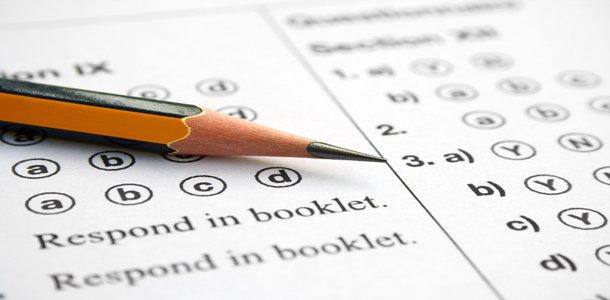
ENTRANCE EXAMINATIONS


C:\Users\user1\Desktop\entranceexam.jpg


VIEW: AAYUSH BELLIAPPA
Entrance exams are essential towards the admission of a candidate to any institution or organization. The organization knows what it wants from the people under it and thus tests interested candidates on their eligibility.
Along with this, entrance tests are extremely helpful at screening candidates; it allows a simple and effective assessment so as to pick the right person.
Entrance tests also are a chance at redemption if candidates have previously scored low in other assessments. An entrance test however is not a sure method of selection but has been proven to be the most efficient and fairest form of selection. It gives everyone a chance to showcase their knowledge and levels the playing field as well as brings about a scope for new and promising talent.
Entrance exams have proven to bring about the most sincere and capable candidates, as they are quite stressful and require an amount of effort.
An added benefit is a feeling of self-confidence to those that clear such exams and rightly deserved. It also ensures a level of security to the selected bunch.
In conclusion, it is fair, efficient and eliminates the chance of giving excuses. Just like try outs are necessary for cultural and sport teams. Entrances are necessary to ensure quality.

C:\Users\user1\Downloads\FullSizeRender.jpg


COUNTERVIEW: MEDHA PRASAD
           Entrance exams have been a traditional way of selecting candidates for colleges. They are efficient and systematic and make the whole procedure easier on the whole. Nowadays, almost all institutions and universities in India have their own entrance tests to check whether a student is qualified enough to gain a seat, they have various parts that cover certain subjects to certain extents and the knowledge of the candidate about these matters is what is taken under consideration.
          In simple words, an entrance exam is simply the procedure in which a student answers the given set of questions which are usually multiple choice based and if they make the required cut off and get sufficient answers right, they’re in. If they fail to do so then they simply do not get a chance. Personally, I think that this is a very unfair procedure to select worthy candidates. There are multiple students that have all the criteria required to be an all rounder or excel in a certain field but because they can’t clear a certain test, they may never get the opportunity to do so and will not be provided with the best kind of education or knowledge preferred by him.
            Besides this, it’s such an odd method to test someone on the very same subject that they want to join the college to learn about. Why ask people questions that they themselves are out here seeking the answers to? Nowadays, Quantitative Aptitude has become a basic necessity, people that want to pursue a course in design are still made to write tests on Quantitative Aptitude and other topics such as General Knowledge which makes no sense as how is this ever going to judge their creativity? And only if they clear this very first round do they get to show their actual artistic skills and this will always be beyond my understanding.
            Even though, entrance exams have their own benefits and make the seeding procedure much easier, it isn’t the most suitable way to be judging the students’ abilities to its fullest and in the best way. If this system must stay, I believe it should be highly modified in such a way that It tests candidates for only the required minimum abilities and questions that are related to the course in anyway. In this way it will not only be fair but completely suitable students may be obtained and even the level of their abilities can be assessed at its best.

C:\Users\user1\Downloads\IMG_2332.JPG